
Clearfox Windows · Planning guides
Window hardware and locking options
By JR Digital Services editorial team · Published 6 November 2026
Swipe tables sideways to see every column.
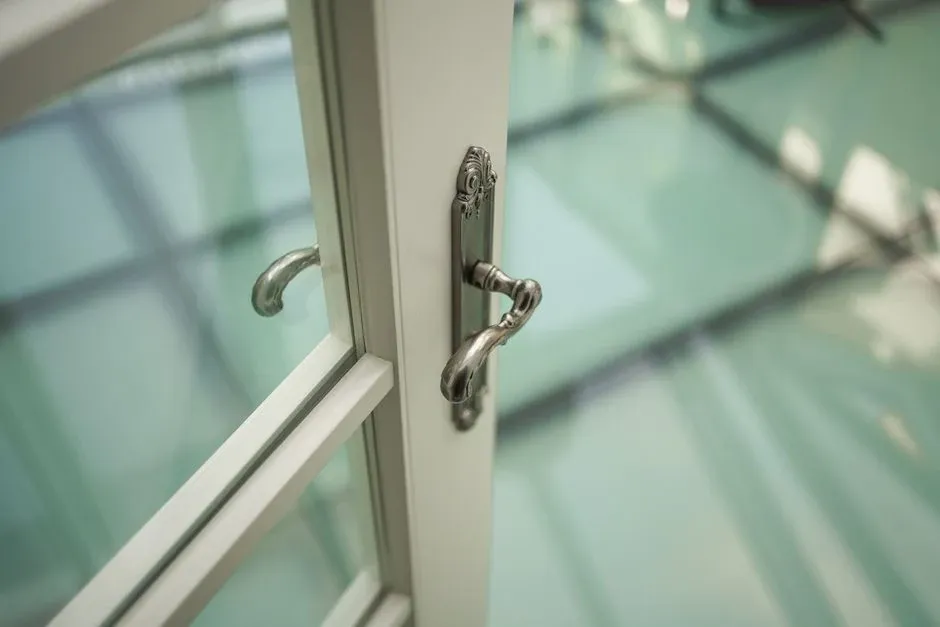
Illustrative glazed-frame hardware photograph; not a proposed window product or locking demonstration. Photo: Katrīne Skrebele. Pexels License.
Which window hardware choices actually matter before you order?
Window hardware — handles, locking points, stays and key options — shapes how you use a window every day, not just how it looks. The right time to work through handle position, key configuration and locking preference is before manufacture, not after installation. This guide helps you identify the practical questions worth raising with your supplier during the selection and quoting stage.
Understanding what hardware a window type actually needs
Different window styles call for fundamentally different operating hardware. An awning window opens by hinging at the top and uses a winder or stay to control how far it swings out. A casement swings sideways on a hinge and typically uses a lever handle with a locking mechanism. A sliding window uses a pull handle or recessed grip, while a louvre window uses a tilt rod or blade adjuster. A bi-fold window folds on a track and may use a simple flush pull.
Because the operating mechanism is built into the frame, your hardware choice is partly determined by the window type you select in the first place. If you are still choosing between window styles, the related guide on awning versus casement window comparison covers how each type operates differently, which bears directly on handle position and reach.
Ask your supplier to describe, specifically for each window on your schedule, what hardware comes as standard, what alternatives are available, and whether any option affects the frame profile or sash construction.
Key lockability and keyed-alike configuration
One verified point from the Stegbar residential aluminium range is worth understanding as a reference for how hardware is typically offered at the product level: their brochure states that all hardware in that range is key lockable, with windows keyed alike for convenience. “Keyed alike” means a single key operates every window lock in the set — a practical preference for most households.
Whether a specific product you are considering offers keyed-alike configuration — or whether mixed key sets are even an option — is a question for the supplier quoting your job. Product offerings differ between manufacturers, states and product lines, and catalogue details can change. Ask your supplier to confirm in writing which key configuration applies to your quote.
Describing how each opening will be used
The most useful thing you can tell a supplier is how you intend to use each window in daily life. Consider:
- Who will operate it? A ground-floor laundry window opened by adults is different from a bedroom window a child might reach, or a window regularly operated by someone with limited hand grip.
- How often? A window you open and close every morning needs hardware that is quick to operate. A window opened rarely for ventilation can tolerate a more deliberate mechanism.
- From which side? A window above a fixed bench or behind a sofa may have a restricted reach zone. The handle position on a casement or awning window is set during manufacture; confirming it suits your reach from inside is worth raising before the order is placed.
- Night ventilation? If you want to leave a window slightly open overnight, ask whether the locking hardware can secure the frame in a partially open position, or whether a separate restrictive fitting is available.
These are access preference questions your supplier needs in order to recommend the right hardware from their available range, not questions with universal answers.
Screening options and how hardware interacts with them
Insect screens, security screens and bushfire screens all affect how you access a window. Whether a security screen fitted to an awning window is operated separately from the window handle, or through a combined mechanism, depends on the specific screen and window model. Ask your supplier how the screen and window are operated together for the exact configuration you are considering. If a retractable screen is fitted to a sliding or bi-fold door, the screen mechanism sits alongside the hardware, not instead of it.
The Stegbar catalogue notes that their range includes insect, security and bushfire screening options with colour-matched frames, including retractable screens for sliding, stacking and bi-fold doors, as well as some windows. Whether retractable screens are available for the specific window type you are ordering is a supplier-specific question. The same applies to any other manufacturer. Confirm screening compatibility at the quoting stage rather than assuming it can be added later without affecting the frame.
For a broader look at how screens relate to window selection, the guide on security screens vs security glass covers the distinction in more detail.
Accessibility and easy-access sill options
The Stegbar catalogue also notes that accessibility and easy-access sills are available within their range. This is a useful prompt to ask any supplier — not just this one — whether their product range includes hardware or sill configurations suited to residents with mobility considerations or specific ergonomic needs. The answers will be product- and supplier-specific.
If accessibility is a priority for your household, raise it explicitly at the quoting stage, describe the specific need and ask to see what the supplier can offer. Do not assume a standard handle height or operating force suits every person who will use the window.
Comparing samples and asking for the hardware schedule
Brochure images of handles are rarely life-sized, and finishes can look different on screen than on an actual frame. Before confirming hardware across a full order, it is reasonable to ask:
- Can I see a physical sample of the handle finish in the colour I am ordering?
- What is the operating force needed to unlock and open this window type?
- Does the handle position change between left-hand and right-hand hinge configurations?
- Is the finish consistent across handles, hinges and lock cylinders from the same set?
A practical consideration worth raising with your supplier: for a casement window in a narrow kitchen alcove intended to be opened from inside while standing at the bench, ask your supplier to demonstrate the handle position relative to the hinge side and swing direction for the specific model you are considering. Handle reach and swing geometry vary between models. Confirming the actual configuration suits your reach from your usual standing position is straightforward before manufacture but difficult to resolve after installation.
Recording hardware choices in the final window schedule
A window schedule is the document that records every opening: its location, type, size, glazing specification and hardware. Hardware choices that are confirmed verbally but not written into the schedule can be misread or missed during manufacture. Before signing off on an order, check that the schedule records:
- Handle style and finish for each window type
- Key configuration (keyed alike, individual keys or no key lock)
- Hinge hand (left or right, where relevant)
- Screen type and whether it is included or excluded
- Any accessibility or easy-access sill requirements
If something is missing from the written schedule, ask for it to be added before the order is placed. This is consistent with the general principle in the window replacement process guide that an itemised, written quote records the agreed scope.
For questions about which window style best suits your situation — which then determines which hardware options apply — see also the guides on fixed versus opening window planning and window accessibility and operation assessment.
If you would like a referral to a window supplier who can discuss hardware options for your project, use the enquiry form to describe your situation and we will follow up where available.
Further reading
- Stegbar Residential Aluminium Windows & Doors catalogue (Stegbar, 2024): hardware, keyed-alike configuration and screening options — stegbar.com.au
- AGWA Guide to Window and Door Selection — selection and compliance checklist framework: agwa.com.au