Clearfox Windows · Adelaide window specialists
Louvre Windows in Adelaide: Pros, Cons and Where They Work
By Clearfox Windows · Published 8 October 2026
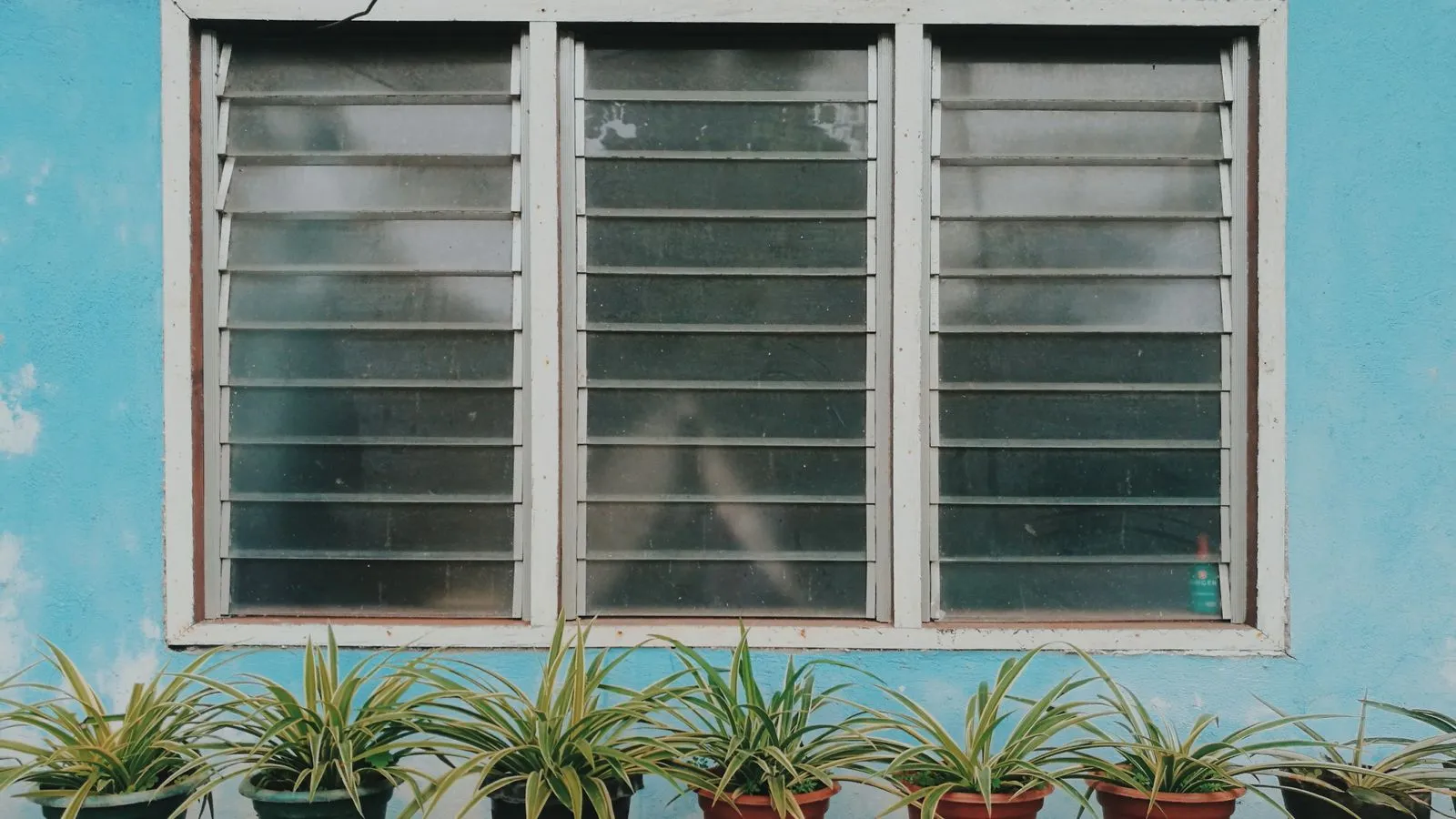
Are louvre windows a good choice in Adelaide?
Louvre windows suit Adelaide homes where ventilation matters most: bathrooms, laundries, high-level openings and spots that catch the evening breeze after a hot day. They’re less suited to living areas you want sealed tight in winter, because louvres don’t close as airtight as awning or casement windows. Placement makes the difference.
Louvres have a strong following in warmer parts of Australia, and they’ve been part of Adelaide homes for decades, from mid-century bathrooms to modern architect-designed extensions. This guide covers how they work, where they shine in Adelaide’s climate, the trade-offs, and the alternatives worth comparing.
How louvre windows work
A louvre window is a frame holding a stack of horizontal blades, usually glass, sometimes aluminium or timber. A handle or winder tilts all the blades together, from fully closed to fully open. Because the blades open across almost the whole height of the frame, you get airflow through nearly the entire opening, not just one sash.
Modern louvre systems are a long way from the rattly units many people remember. Current frames typically have better seals along the blade edges, lockable operators and a choice of glass types, including obscure glass for bathrooms and safety glass where it’s needed.
The pros of louvre windows in Adelaide
Ventilation on summer evenings
Adelaide summers are hot and dry, and on many evenings the temperature drops and a cooler breeze arrives. Louvres are very good at catching that air. With louvres on opposite sides of the house, you can set up a cross-breeze that flushes out heat after a hot day without running the air conditioner.
Control over airflow
You can open louvres slightly for a trickle of air or fully for maximum flow. The blades deflect rain to some degree when partly open, which helps in a light shower.
Privacy with airflow
In bathrooms and laundries, louvres with obscure glass give ventilation and daylight while keeping the room private. That’s one reason they’ve long been popular in Adelaide wet areas.
Flexible design
Louvres can be combined with fixed glass panels or other window styles in one frame. Architects often use them low or high on a wall to draw air through a space while leaving the view through a large fixed pane.
The cons of louvre windows
Winter draughts and heat loss
The biggest drawback for Adelaide is winter. Even with improved seals, a louvre window has many more joints than an awning or casement window, and it rarely closes as tightly. In a cool, wet Adelaide winter, and especially in the Adelaide Hills, that can mean draughts and heat escaping. If you’re trying to improve comfort and energy efficiency, louvres in main living areas work against you.
Single glazing is the norm
Louvre blades are usually single panes, so you don’t get the insulation benefit of double glazing. Compared with a double-glazed awning or casement window, a louvre window lets more heat in during summer and out during winter.
Security
Older louvre windows had a reputation for blades that could be slid out from the outside. Modern systems usually address this with blade clips or locking operators, but louvres still need thought on ground-floor and street-facing openings. A fixed security screen on the outside is a common answer. Our guide to security screens vs security glass covers the options.
Cleaning
Lots of blades means lots of glass edges to clean. It’s manageable, but it takes longer than wiping a single sash.
Noise
More joints means more paths for sound. Louvres aren’t a good choice for bedrooms facing a busy road. See our guide to soundproof windows for what works better.
Louvre windows in bushfire-prone areas
If your property is in a bushfire-prone area, such as much of the Adelaide Hills, the Bushfire Attack Level (BAL) set by the property’s assessment determines what new windows must meet under AS 3959. Louvres have many gaps and edges where embers can lodge, so they can be restricted at higher BALs, and at the top levels you’ll typically need a tested system or a bushfire shutter. Your BAL assessor, builder or certifier confirms what applies. Our guide to BAL-rated windows explains the levels.
Louvre windows and safety glass
Glass louvres in bathrooms, near doors or low on a wall can fall within human-impact areas, where AS 1288 requires Grade A safety glass. Your glazier, builder or certifier will confirm the exact zones for your layout.
Where louvres work best in an Adelaide home
| Location | Fit | Why |
|---|---|---|
| Bathroom | Good | Ventilation and privacy with obscure glass |
| Laundry | Good | Moisture and heat out, light in |
| High-level clerestory | Good | Hot air escapes at ceiling height |
| Hallway or stairwell | Good | Helps a cross-breeze through the house |
| Main living room | Mixed | Great in summer, draughty in winter |
| Bedroom on a busy road | Poor | Noise and air leakage |
| Ground-floor street front | Mixed | Needs security screening |
Alternatives to louvres
If you like the ventilation idea but are worried about draughts, two of the most common types of windows in Adelaide are worth comparing:
- Awning windows hinge at the top and push outward. They seal well, can be left open in light rain, and suit bathrooms and bedrooms. See awning windows.
- Casement windows hinge at the side and open fully, catching side breezes. They also seal tightly. See casement windows.
Both are available double glazed. A common approach is a large fixed or double-glazed window for the view and insulation, with a smaller awning or louvre panel for airflow. For a wider comparison, read our guide to the best window types for Adelaide weather.
Related services
We supply and install windows in every common style through our window installation service, including awning windows and casement windows. For screened openings, see security windows. We work across Adelaide metro and the Adelaide Hills.
Frequently asked questions
Are louvre windows energy efficient?
Not as efficient as well-sealed double-glazed awning or casement windows. Louvres have more joints and usually single-pane blades, so they let more heat through, which matters most in an Adelaide winter.
Are louvre windows secure?
Modern louvre systems are much more secure than older ones, with blade clips and lockable operators. On ground-floor and street-facing openings, many homeowners add an external security screen for extra protection.
Do louvre windows let rain in?
When partly open, the angled blades shed light rain reasonably well. In heavy, wind-driven rain it’s best to close them, especially on exposed walls.
Can louvre windows be used in bathrooms?
Yes, and that’s one of their most common uses. Obscure glass gives privacy, and the airflow helps clear steam. Glass in wet areas may need to be safety glass under AS 1288, which your installer will confirm.
Can I have louvres in a bushfire-prone area?
Possibly, depending on your Bushfire Attack Level. Louvres can be restricted at higher BALs, and the highest levels typically need tested systems or shutters. Your BAL assessor, builder or certifier will confirm what applies.
What’s better than louvres for a draughty room?
Awning or casement windows usually seal far better than louvres and can be double glazed. A combination of a fixed pane with a small opening window often gives the best balance of light, airflow and comfort.
Get a quote
Thinking about louvres, or about swapping old louvres for something warmer? Tell us about the openings you’re considering. Request a quote online or call 0468 038 136, and we’ll arrange a free on-site measure and a written, itemised quote.