
Clearfox Windows · Planning guides
Replacing Windows in Heritage and Brick Homes Adelaide
By JR Digital Services editorial team · Published 9 May 2026 (updated 6 November 2026)
Swipe tables sideways to see every column.
Replacing windows in heritage and brick homes Adelaide
For an older Adelaide home, start with the actual property and each proposed opening. Establish the planning context, describe what you want to retain or change, and request an assessment of the existing window and surrounding construction. Compare repair, replacement and any proposed glazing upgrade against that same brief before ordering.
Clearfox is a JR Digital Services enquiry and referral site. The professional considering your property determines the work they can offer and the assessment it needs; this guide helps you organise that discussion.
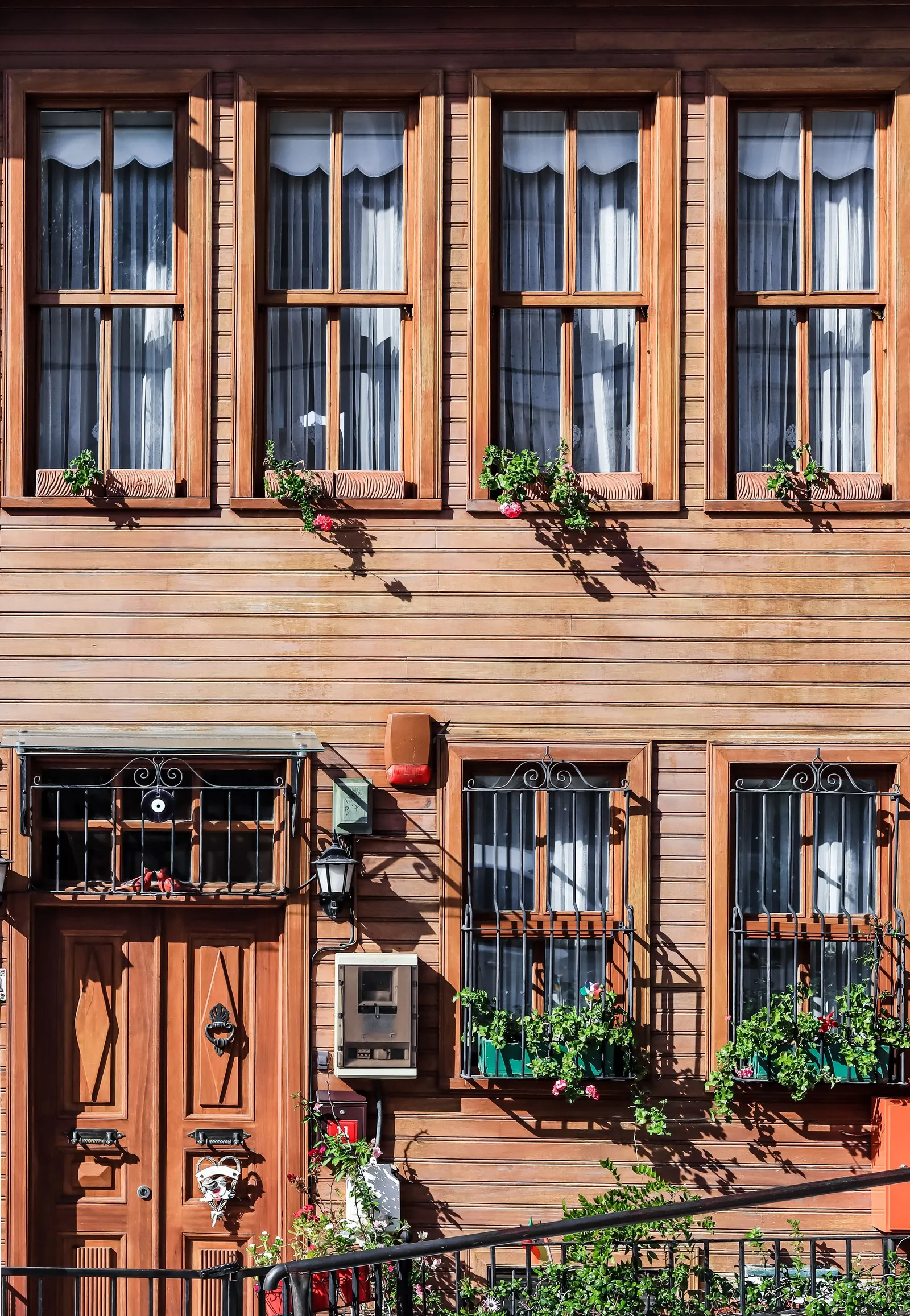
Illustrative photograph: timber-clad facade with windows, curtains, flower boxes and decorative metal grilles. Photograph Door and Windows on Building Facade by Oktay Köseoğlu / Pexels, used under the Pexels License. Full composition proportionally resized. This is not an Adelaide project, evidence of heritage listing, a brick-wall example or a window-performance specification.
Separate heritage status from the appearance of the house
An older appearance does not tell you which planning provisions apply. PlanSA’s heritage and character guidance distinguishes State Heritage Places and Areas, Local Heritage Places, Historic Areas and Character Areas. Historic Area Statements describe historic attributes; Character Area Statements address important streetscape characteristics. Treat those categories as a reason to identify the actual address and proposal, rather than a table predicting which frame material will be approved.
Record the address, the overlay information you find and any existing approval or heritage documents. Ask the relevant planning authority which provisions and statements apply to the particular windows, whether the proposed work needs approval, and what drawings or details it needs to consider. Keep its response with the proposal you send to suppliers.
The Department for Environment and Water’s State Heritage Area guidance explains that heritage development can include changes beyond structural work. Its page also identifies limited repair and painting exemptions in specific circumstances. A description such as “like for like” is therefore something to explain and check for the actual work, rather than proof of an exemption.
Prepare an opening-by-opening record
Give each window a simple reference, such as bedroom front left or kitchen courtyard. From safe, accessible positions, collect an overall photograph and a view of the details you want to discuss. Existing plans, previous quotations and maintenance records can accompany these photographs. Leave difficult access and investigation to the person assessing the work.
For each reference, write down:
- What you want to retain: for example the visible divisions, opening arrangement, colour or trim.
- What concerns you: describe sticking, visible damage, draughts or water marks without assigning a hidden cause.
- What you want to change: operation, glazing, appearance or the size of the opening.
- Which neighbouring finishes need consideration, including the wall, sill and internal trim.
- Which rooms need particular access arrangements during an assessment or proposed work.
The resulting list gives different suppliers the same starting point. It also lets you identify a quotation that addresses only selected windows rather than assuming every opening is included.
Compare repair and replacement as actual scopes
DEW’s advice for heritage owners recommends experienced heritage advice for work affecting a State Heritage Place or a property in a State Heritage Area. Its guidance describes help with conservation planning, suitable trades and interpreting technical proposals. Ask whether that experience is relevant to your property and who will supply it.
A repair proposal should identify what is being retained, what is being repaired or renewed and what assessment supports that scope. A replacement proposal should identify which existing components are removed and the actual replacement details. Neither the age of the window nor a photograph settles that comparison.
For sash window restoration in Adelaide, ask the assessor to explain the existing mechanism and the proposed work on that particular assembly. Request any limits on the assessment, further investigation needed and the approach if additional problems are discovered. Avoid comparing a repair allowance with a fully specified replacement as if both cover the same work.
Discuss glazing without assuming compatibility
If double glazing heritage homes is part of your brief, ask for the proposed assembly, drawings and product information. Have the professional explain compatibility with the assessed window, operation, proposed appearance and any planning requirements. A supplier’s description of a slim unit does not establish that it fits or is suitable for your existing sash.
Keep three issues distinct: retaining existing fabric, the proposed window or glazing specification, and the performance you want to discuss. Ask what evidence supports each proposal and which components it covers. If secondary glazing or film is suggested, request a separate written scope and compatibility assessment rather than assuming the original mechanism, appearance or approval position is unchanged.
A related guide on architectural film and heritage glass is on VistaFox, another JR Digital Services site. It is a separate topic for discussion with the relevant provider; a link does not establish that film is suitable or approved for your property.
Make the brick and finishing scope explicit
For replacing windows in brick homes Adelaide enquiries, describe the existing wall without guessing its concealed construction from the building’s age. Ask the contractor what assessment of the opening and surrounding construction is included, who will undertake it and which proposed details depend on that assessment.
| Part of the proposal | Information to request |
|---|---|
| Existing opening | Which window and surrounding areas are assessed; recorded limits or further investigation |
| Removal and installation | Actual extent, responsible provider and proposed supporting documentation |
| Brick, sill or rendered finish | Included work, matching expectations and any separate allowance |
| Internal finish | Trim, plaster, painting and what is excluded |
| Changes after assessment | How revised scope and price will be explained and agreed |
Ask who coordinates any additional professional assessment or finishing trade. A photograph of the facade is useful context, but it does not provide an installation or fixing design. Keep the contractor’s proposed method and supporting details in their own documents.
Compare written prices for the same work
Request an itemised proposal using your window references. Separate assessment, proposed window work, surrounding finishes, access and any approval-related services so you can see what each price includes. Ask whether an amount is a fixed item, an allowance or work to be priced after further information.
For example, one proposal may cover the new window and installation while another includes painting and trim. Mark that difference on your comparison sheet and request clarification. You do not need an Adelaide-wide price band to see that those documents describe different scopes.
If staging the project is proposed, ask which openings each stage includes, how it relates to the assessed design and any approval conditions, and what remains to be quoted later. Do not assume a rear elevation can be undertaken first simply because it is less visible from the street.
Questions for your enquiry
Does a heritage-looking house automatically need approval for replacement windows?
Check the actual address, planning provisions and proposed work with the relevant authority. Appearance alone does not establish listing, an exemption or the approval requirements.
Can existing heritage sash windows receive double glazing?
Ask for an assessment of the particular assembly and a documented proposal. Product thickness alone does not establish compatibility, operation or planning acceptability.
Should I restore or replace the windows?
Compare the assessed repair and replacement scopes, retained details, proposed products and written prices. Ask the professional to explain the evidence and limits behind their recommendation for each opening.
How do I compare brick reinstatement allowances?
Match each allowance to the actual opening, proposed work and finishing expectations. Clarify what is included, what needs further assessment and how any changed scope will be presented.
Continue with a defined brief
The double-hung, timber window and replacement window enquiry pages cover related topics. Confirm the actual provider’s scope and availability. Use your opening references, property information and unanswered questions when you send an enquiry.